
Between Editions: The Great Trust Migration
A free feature of The Rising Tide. No subscription needed to read.

One of the most important findings in America today is hiding inside a contradiction. Americans tell pollsters they trust government less than they once did. Confidence in the media, higher education, organized religion, and many other major institutions has also declined.
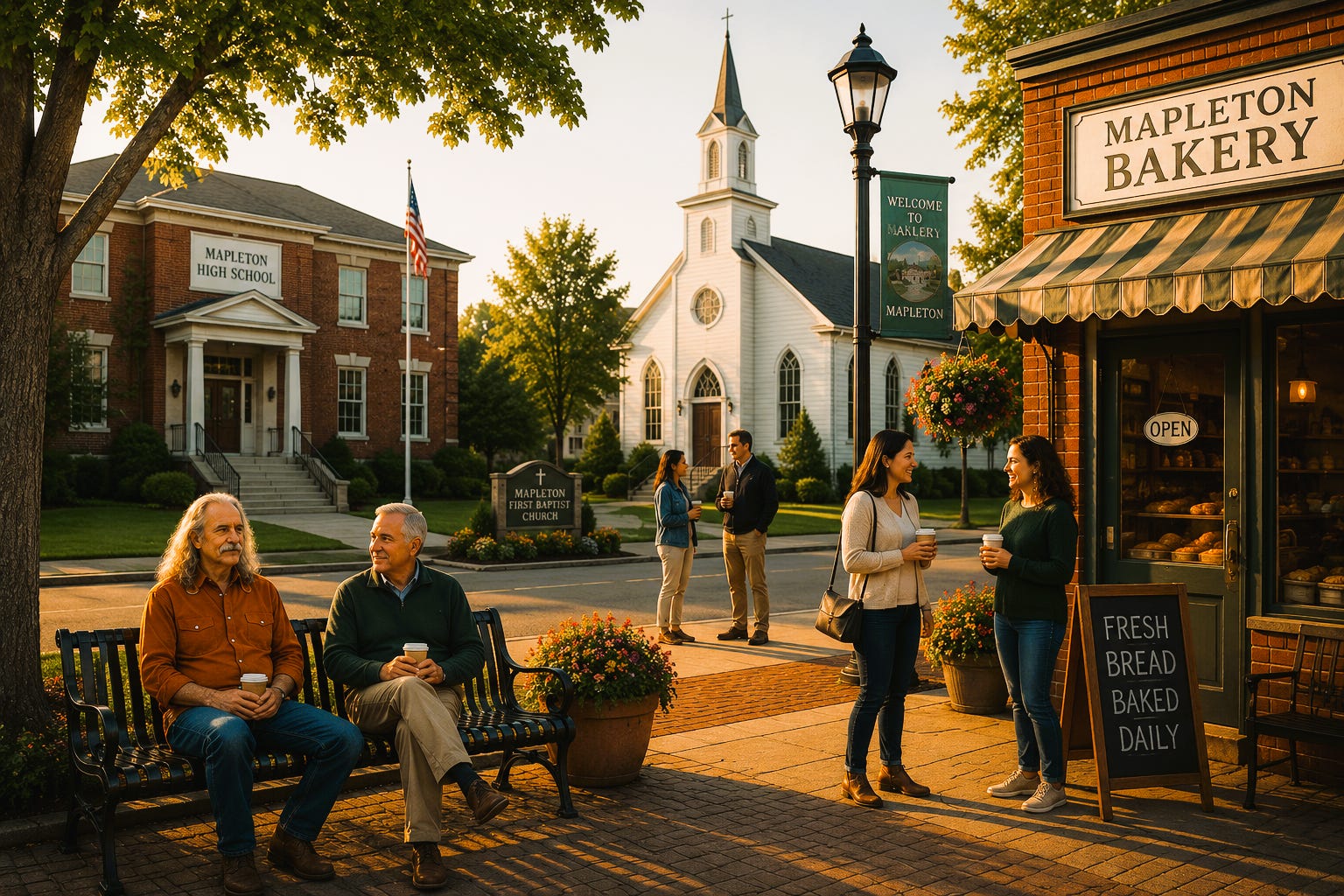
Yet surveys consistently show employers ranking among the most trusted institutions in the country. Teachers, coaches, pastors, local leaders, and community organizations continue to enjoy levels of confidence that many national institutions can only envy. The pattern suggests that America has not lost its ability to trust. Trust has simply moved closer to home.
That finding helps explain much of the country’s current political and social turbulence. If trust were collapsing across the board, Americans would likely be withdrawing from institutions altogether. Instead, they are becoming more selective. They are placing greater confidence in people they can observe directly and less confidence in institutions that feel distant, complicated, or unaccountable.
The country’s trust crisis may therefore be better understood as a trust migration, a gradual shift away from large national institutions and toward relationships rooted in daily experience.
Trust Didn’t Disappear. It Moved.
Political scientist Ian Bremmer believes many observers misunderstand the forces driving public frustration. “Trump is first and foremost a symptom, not a cause,” he told The New York Times. In his view, the political upheavals of recent years did not create the loss of trust. They revealed it.
Millions of Americans had already begun questioning whether the institutions governing the country were working as intended, and those doubts were building long before any particular election cycle.
The persistence of trust in employers helps explain why. Most Americans spend more time interacting with workplace leaders than with politicians, journalists, university presidents, or other national figures. Employees can see whether promises are kept, whether communication is honest, and whether difficult decisions are handled fairly.
Trust is never automatic, but proximity creates opportunities to earn credibility. A national institution often asks citizens to trust it from a distance. An employer, teacher, pastor, or coach has the opportunity to demonstrate trustworthiness repeatedly through direct experience.
This distinction points toward a broader shift in how Americans evaluate authority. Titles and prestige still matter, but they carry less weight than they once did. People increasingly trust institutions they can experience directly rather than institutions they know primarily through screens, press conferences, and public statements. In an age of skepticism, credibility is becoming more personal.
When the System Stops Feeling Fair
Bremmer argues that much of the erosion in trust stems from a growing belief that the system no longer operates fairly. “The American democracy has somehow gotten completely subverted by special interests. It’s coin-operated. It’s controlled by money. There’s a two-tier system,” he said.
Whether that perception is entirely accurate is almost beside the point. Public confidence depends heavily on legitimacy. Once people conclude that different rules apply to different groups, trust begins to weaken.
The American Dream has long served as a stabilizing force because it gave citizens confidence that effort and talent could improve their lives. Bremmer believes that faith has weakened. “The American dream is not for everybody, no matter how hard you work,” he said. He also argues that Americans are now “far less class mobile today than Europeans are, than Canadians are,” a remarkable observation for a nation that traditionally defined itself through opportunity and upward mobility.
When institutions are seen as creating opportunity, citizens tend to support them even when they disagree with specific policies. When institutions are viewed as protecting insiders while limiting opportunities for everyone else, people become more skeptical, more cynical, and more willing to support outsiders who promise disruption rather than continuity.
The Shocks That Changed Everything
The decline in trust did not emerge from a single event. Instead, it developed through a series of shocks that steadily weakened confidence in large institutions. The financial crisis, the Iraq weapons controversy, church abuse scandals, corporate misconduct, and repeated political disappointments all chipped away at public confidence.
The rise of social media amplified the effect by making institutional failures permanently visible. Previous generations experienced scandals and mistakes as well, but those events often faded with time. The digital age ensured that every failure could be revisited endlessly.
The pandemic accelerated an existing trend. Churches closed, offices emptied, schools moved online, and many of the relationships that give structure to everyday life were disrupted. Government officials, health authorities, media organizations, and political leaders often delivered conflicting messages while responding to rapidly changing circumstances. Some confusion was unavoidable, but many Americans emerged from the experience with less confidence in large institutions than they had before.
At the same time, many people found themselves relying more heavily on family members, neighbors, employers, and local communities. Those relationships often provided practical support during a period of uncertainty and disruption. The contrast reinforced an emerging lesson: when large institutions appear remote or confusing, trust naturally flows toward people whose actions can be observed directly.
Why Distance Matters
The employer-trust finding reveals something larger than a favorable opinion of business leaders. It suggests that distance has become one of the defining challenges facing modern institutions.
Americans continue to place confidence in people they know, work with, learn from, worship with, and encounter regularly. What they increasingly distrust are institutions that feel remote, opaque, and difficult to influence.
Teachers, pastors, coaches, local officials, and workplace leaders benefit from the same dynamic. Their authority rests less on prestige than on repeated interaction. People can evaluate their decisions through experience rather than relying on competing narratives from politics or the media. Trust becomes less about status and more about visible competence.
America’s trust crisis is therefore not ultimately about trust itself. Trust remains alive in communities across the country. The deeper issue is distance. Citizens have grown skeptical of institutions that seem disconnected from their daily lives while continuing to place confidence in leaders they can observe, question, and evaluate for themselves.
Rebuilding confidence in large institutions will require more than better messaging. It will require restoring the sense that those institutions are responsive, accountable, and worthy of the trust they seek. Until that happens, the great trust migration is likely to remain one of the most powerful forces shaping American life.
Between Editions is a free weekly feature of The Rising Tide, giving readers timely analysis between the magazine’s main editions. But it is only a small part of what we publish.
Paid subscribers receive full access to every edition of The Rising Tide, including our in-depth coverage of economics, business, politics, and global affairs. They also receive complete access to our sister online magazine, Barber’s Mexico Business Report, which provides exclusive reporting and analysis on Mexico’s economy, business climate, and investment trends.
If you value independent, thoughtful journalism that goes beyond the daily headlines, becoming a paid subscriber is the best way to support our work and gain access to everything we publish.