
Between Editions: Looking for Home
A free feature of The Rising Tide. No subscription needed to read.

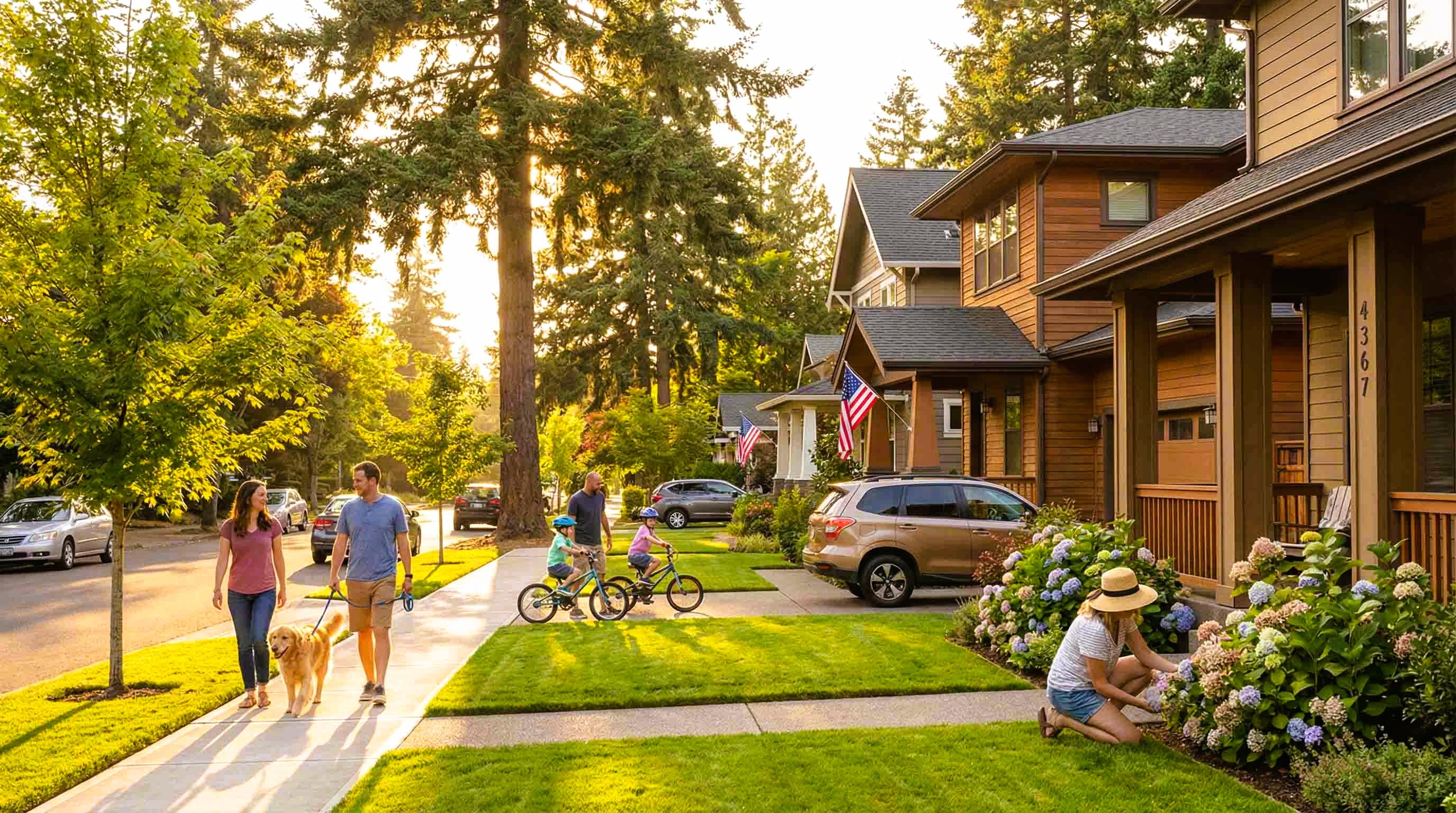
In neighborhoods across America, familiar faces pass one another almost every day. People wave while walking the dog, bringing in the trash cans, or checking the mailbox, but many never move beyond those brief exchanges. It is not that Americans have become unfriendly. They have simply become less connected in the ordinary ways that once tied communities together.
A generation or two ago, many of those connections happened almost without thinking. Parents coached Little League together, neighbors served on the volunteer fire department, church suppers filled fellowship halls, civic clubs organized local projects, and school events drew families from every corner of town.
Those places never eliminated disagreement. They simply reminded people that they shared far more than a political label. A Democrat and a Republican might spend an afternoon repairing a playground before discovering they disagreed about taxes or foreign policy.
That quiet civic life has been changing for decades. Membership in many local organizations has declined, churches are smaller than they once were, local newspapers have disappeared from hundreds of communities, and more of everyday life now happens through phones and computer screens.
None of those changes seemed dramatic by themselves, yet together they altered something important. They reduced the number of places where Americans regularly encountered people outside their own circles. The need to belong, however, never disappeared. It simply found a new home.
When community grows smaller
Political scientist Robert Putnam warned about this shift more than 20 years ago in Bowling Alone. His concern was never really about bowling leagues. He was describing the slow erosion of what he called social capital, the habits of trust and cooperation that develop when people work together in churches, civic groups, neighborhood organizations, and other local institutions. Those places taught people how to disagree without becoming enemies because they were united by a common purpose that mattered more than politics.
Americans still care deeply about family and close friends, but many have fewer opportunities to build relationships with people outside those circles. The result is a society where private life may remain strong while public trust grows weaker. Democratic life depends on those wider relationships because they create confidence that strangers can also become partners, volunteers, coworkers, or neighbors.
Pew Research Center found that Americans today are less likely than previous generations to say most people can be trusted, while Gallup has reported historically low confidence in many major institutions. The numbers do not prove that Americans have become less generous or less decent. They do suggest that many people feel less certain about the larger society around them and less confident that its institutions deserve their trust.
When trust becomes harder to find, people naturally search for it somewhere else. Politics is ready to fill that need because it offers identity, certainty, and a clear sense of who belongs on your side. It promises purpose in an age when many traditional sources of belonging have become less central to everyday life.
Politics fills the empty space
That larger story surfaced during a recent conversation between Fareed Zakaria and David Brooks. Zakaria observed that Americans increasingly appear to judge economic conditions through politics rather than judging politics through economic conditions. “Rather than economics shaping their politics,” he said, “it’s politics that is shaping their view of economics.”
Once political identity becomes the lens through which people interpret events, facts themselves begin to acquire partisan meaning. Two people can watch the same speech, read the same economic report, or witness the same event and come away convinced they have seen completely different realities. Politics no longer explains only public affairs. It begins to explain everyday life.
Research from the American National Election Studies reflects this change. Americans have grown more likely to view supporters of the other political party with suspicion and distrust rather than simply as fellow citizens who hold different opinions. Party affiliation increasingly functions as a social identity, shaping friendships, neighborhoods, and even perceptions of character. Disagreement becomes more difficult because it feels less like a debate over ideas and more like a challenge to personal identity.
Brooks captured the change in a single sentence. “We’re overpoliticized and undermoralized,” he said. He argued that politics offers people a team but not a genuine community, adding, “Politics seems to offer you a team, but it doesn’t really offer community. It seems to offer you righteous action, but you’re just tweeting.”
Politics can generate excitement, outrage, and solidarity, but it rarely asks people to practice the habits that hold communities together. It does not require them to coach a youth team with someone who votes differently, organize a neighborhood cleanup, comfort a grieving family, or work beside strangers after a storm. Those experiences build trust because they ask people to share responsibilities before they compare ideologies.
Rebuilding the middle ground
Political theorist Yuval Levin has argued that healthy institutions exist partly to shape people into responsible citizens. They teach patience, responsibility, compromise, and the discipline of belonging to something larger than oneself. Those lessons cannot be learned through social media or cable television. They are learned by showing up, listening, serving, and accepting that every community includes people with whom we disagree.
That may be the deeper challenge facing America today. Much of the public conversation focuses on lowering the political temperature, electing different leaders, or finding a better message. Those goals may have value, but they do not address the quieter problem underneath. A democracy cannot depend entirely on elections to produce social trust. Elections reveal the health of civic life. They cannot create it.
Communities become stronger when people meet for reasons that have nothing to do with politics. They become stronger when neighbors work together after a flood, volunteer at a food pantry, mentor children, organize a charity drive, or attend a school concert because someone they know is performing. In those moments, political identity fades into the background because something more immediate takes its place. People begin to see one another not as representatives of opposing camps but as fellow citizens sharing the same town and the same future.
America has passed through periods of deep division before, yet it repeatedly found ways to rebuild confidence in itself. It did so not because everyone suddenly agreed, but because Americans continued to build institutions that rewarded cooperation alongside competition. The country’s greatest strength has never been unanimous opinion. It has been the ability of ordinary people to work together despite profound differences.
The opposite of tribal politics is not agreement. It is belonging. It is the quiet rebuilding of the everyday places where trust grows naturally, friendships cross ideological lines, and citizenship becomes something practiced together instead of argued about from a distance.
When Extraordinary Becomes Ordinary
President Donald Trump’s latest financial disclosure raises a broader question than the size of his personal fortune. It asks whether Americans still react to allegations of presidential conflicts of interest the way they once did, or whether years of nonstop political controversy have changed what the public considers remarkable.
The 927-page filing portrays 2025 as the most lucrative year of Mr. Trump’s business career. According to the disclosure, a cryptocurrency venture that barely existed when he returned to office generated roughly $1.2 billion in reported value for Mr. Trump during the year, surpassing the wealth created by many of the real estate projects that built his reputation over several decades.
The filing also reported about $636 million in income tied to the $TRUMP memecoin, along with tens of millions of dollars from legal settlements, branded watches, sneakers, Bibles, fragrances and overseas licensing agreements. The White House rejects any suggestion that the president has acted improperly.
Mr. Trump has said outside advisers manage his investments through what he described as a blind account, and he told CNBC that even if he had known more about some of the reported gains, “there’s nothing illegal with that.”
The memecoin’s financial results reveal another side of the story. According to cryptocurrency analytics firm Nansen, nearly one million buyers of the $TRUMP token had lost money through the end of June, with combined losses totaling about $3.81 billion. The firm estimated that roughly two out of every three wallets that purchased the token were underwater as its price fell dramatically from its post-launch peak.
Unlike ordinary investors, Mr. Trump profited regardless of whether the token’s price rose or fell because the structure of the project generated income from trading activity itself. He also promoted the token repeatedly on his Truth Social platform after introducing it just days before his inauguration, encouraging supporters to join what he called his “very special Trump community.”
The president’s cryptocurrency interests extend beyond the memecoin. World Liberty Financial, the cryptocurrency company associated with the Trump and Witkoff families, has attracted major foreign investment while the Trump family has also been linked through public reporting to companies pursuing billions of dollars in federal support for critical minerals projects.
Democrats are also expected to continue examining Mr. Trump’s acceptance of a $400 million aircraft from Qatar, which he has said will ultimately be transferred to his presidential library after he leaves office. Whether any of these issues significantly changes public opinion is a different question.
Former White House communications director Anthony Scaramucci and technology journalist Cara Swisher recently argued that the larger story is not simply the growth of Trump’s business empire but the country’s growing tolerance for controversies that once would have dominated American politics. They suggested that repeated exposure to ethical disputes has steadily lowered expectations about what constitutes unacceptable conduct in public office.
During a discussion on PBS NewsHour, David Brooks, a staff writer with The Atlantic, reminded viewers that Watergate, the 1972 break-in at Democratic Party headquarters and the subsequent cover-up that ultimately forced President Richard Nixon to resign, "was a serious criminal business" in which "more than a dozen people went to jail." Yet Brooks also agreed with Vice President J.D. Vance's broader observation about today's political climate.
“But having said that, J.D. Vance is absolutely right,” Brooks said. “It would be a one-day story today because you define deviance down. The standards for the entire country have been deteriorating because of what we’ve lived through over the last decade.”
Brooks was not defending Nixon or arguing that Watergate and Trump's presidency are equivalent. His point was that political polarization, fragmented media and years of continuous controversy have fundamentally changed how Americans process scandal. Events that once might have dominated the national conversation for months now compete with thousands of other stories before quickly fading from view.
If Brooks is right, the lasting significance of Trump's financial disclosure may reveal less about one president's wealth than about the country's changing expectations. The biggest political story may no longer be the allegations themselves. It may be how years of political conflict have changed what many Americans consider surprising, troubling or even disqualifying.
Between Editions is a free weekly feature of The Rising Tide, offering timely analysis between the magazine’s main editions when important stories are still unfolding. Paid subscribers receive full access to Between Editions, every edition of The Rising Tide, and our sister online magazine, Barber’s Mexico Business Report. Your support helps fund journalism focused on understanding what is changing, and why it matters.