
Between Editions: The Revolt Against AI
The Promise and the Backlash

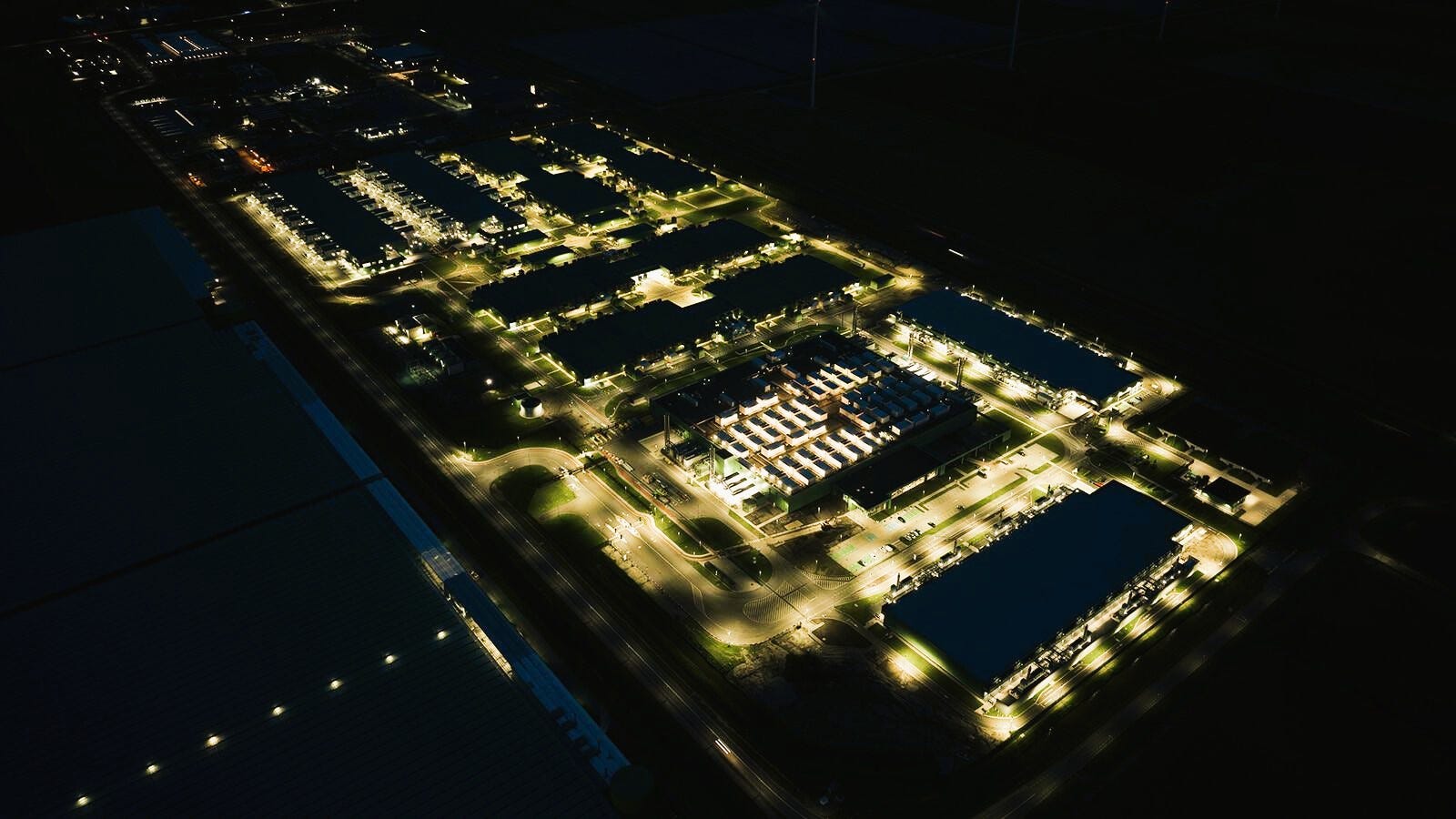
Artificial intelligence was supposed to usher in a new era of prosperity. Tech executives promised explosive productivity growth, scientific breakthroughs, and a transformation on the scale of the Industrial Revolution. Investors poured billions into AI startups and giant data centers, while politicians largely treated the expansion as inevitable.
But outside Silicon Valley, the public mood has started turning sharply against the industry. Americans are becoming increasingly uneasy not only about artificial intelligence itself, but also about the enormous infrastructure, energy demands, and economic disruption required to support it.
Concerns that once centered mainly on automation are now spreading into fears about layoffs, rising utility bills, water consumption, environmental strain, and the growing power of technology companies over daily life.
The backlash has become visible enough that even AI executives now openly acknowledge the industry has a serious political problem.
During a recent commencement address at the University of Arizona, former Google chief executive Eric Schmidt praised artificial intelligence as a technological transformation that would be “larger, faster and more consequential than what came before.”
Parts of the crowd responded with boos. Schmidt paused and acknowledged the reaction. “I know what many of you are feeling about that,” he told graduates. “I can hear you.”
That moment reflected something larger now unfolding across the country. Increasingly, many Americans no longer see AI as a symbol of progress. They see it as a disruptive force arriving faster than the country’s political system, labor market, or infrastructure can realistically absorb.
Even relatively casual uses of artificial intelligence can now trigger surprisingly emotional reactions. I’ve experienced that myself on Facebook after posting AI-generated images like the one below. Some connections dismissed the pictures as “AI slop” and accused me of helping corporate America destroy jobs while contributing to environmental damage through the energy demands of AI systems.

The reactions were striking not simply because people disliked the images, but because of the intensity behind the criticism. For many Americans, opposition to AI is no longer just about technology. It has become tied to broader anger about corporate power, economic insecurity, and distrust of the institutions driving change.
Young Americans Are Losing Faith
The anxiety surrounding AI is especially intense among younger Americans entering adulthood just as companies begin restructuring around artificial intelligence systems.
According to research from ZipRecruiter, nearly half of recent college graduates say AI has already affected hiring in their field, while more than half of current students believe the technology will reduce the number of entry-level jobs available to them. The fear is growing not only among struggling workers, but among ambitious young professionals who expected education to provide economic stability.
One recent survey found that only 18 percent of Gen Z respondents felt hopeful about artificial intelligence, while nearly half said the risks outweighed the benefits. Companies are increasingly citing AI as justification for layoffs, and according to the Alliance for Secure AI, nearly 120,000 AI-linked job losses have already occurred in the United States since last year.
At the Stanford Leadership Forum last month, Citadel founder Ken Griffin described AI systems inside his hedge fund completing work in days that previously required teams of specialists working for months.
“These are not mid-tier white collar jobs,” Griffin said. “These are extraordinarily high-skilled jobs” now being automated by artificial intelligence.
The concern is spreading beyond employment and into education itself. In a guest essay for The New York Times, Stanford senior Theo Baker warned that generative AI tools had made cheating “omnipresent” on college campuses while weakening students’ intellectual resilience and critical-thinking abilities.
Many younger Americans increasingly view AI not as empowering technology, but as something hollowing out both opportunity and human creativity at the same time. That hostility is now appearing openly in popular culture.
“The people who make this stuff are losers,” comedian Hannah Einbinder, star of HBO’s “Hacks,” told The Times in remarks that captured the growing resentment toward the technology industry among younger audiences.
Pollsters say the speed of the backlash is unusually sharp for a technology still being marketed as the future of the economy. Researchers at Stanford University and the University of California, Berkeley have found public anxiety intensifying rapidly as Americans become more exposed to the practical consequences of AI expansion.
The Data Center Revolt
Much of the anger surrounding artificial intelligence is now focusing on the giant data centers powering the industry. Modern AI systems depend on massive computing facilities packed with advanced processors operating around the clock. Those facilities consume enormous amounts of electricity while generating enough heat to require industrial-scale cooling systems that can use millions of gallons of water annually.
For years, most Americans barely noticed data centers. They were treated as quiet parts of the digital economy that arrived with promises of tax revenue and construction jobs. The AI boom has changed that because communities are beginning to understand the scale of what is being built around them.
In many communities, local economic developers aggressively court data-center projects because they promise property-tax revenue, construction activity, and the appearance of future-focused economic growth. Compared with factories or heavy industry, data centers are often marketed as clean development.
But residents in some areas increasingly believe local leaders approved projects without fully considering the long-term costs involving water consumption, electrical strain, noise, land use, and future utility pressures. That perception has deepened mistrust not only of the technology industry itself, but also of the local political and business networks helping drive the expansion.
Across the country, local opposition is growing rapidly. Voters in Festus, Missouri, recently ousted four city council members only a week after they approved a $6 billion data center project. Communities from Maine to Arizona are now attempting to block or ban new facilities altogether as residents organize around fears involving electrical strain, water use, noise, farmland loss, and rising utility bills.
“People just feel like they’re under siege,” Sen. Josh Hawley of Missouri told The Wall Street Journal.
The pressure on infrastructure could become enormous over the next decade. The Electric Power Research Institute estimates data centers may consume between 9 percent and 17 percent of all U.S. electricity generation by 2030. That projection has fueled growing fears that ordinary households may eventually absorb part of the cost of supporting the AI boom through higher utility bills and taxpayer-funded grid expansion.
Opposition to data centers is increasingly scrambling traditional political alliances. Politicians with strong followings among younger voters, including Bernie Sanders, Alexandria Ocasio-Cortez, and conservative investor James Fishback, have all called for moratoriums or restrictions on new projects. Environmental activists, rural conservatives, labor advocates, and younger voters worried about economic displacement are increasingly finding themselves on the same side of the issue.
The political pressure is beginning to reach Washington as well. Sen. Adam Schiff has proposed legislation that would require giant AI data centers to effectively “bring their own power” rather than shifting infrastructure costs onto residential customers. Similar debates are now emerging in several states as lawmakers confront growing public frustration over who will ultimately pay for the AI buildout.
Water, Power, and Public Anger
The backlash is becoming intensely local because communities are increasingly dealing directly with the physical demands of AI infrastructure.
In Fayetteville, Georgia, residents learned that a large data center tied to Quality Technology Services had reportedly consumed nearly 30 million gallons of water without proper billing arrangements. County officials later described the situation as an operational misunderstanding rather than deliberate misconduct, but the controversy spread rapidly after residents obtained records through open-records requests.
Public resistance has grown strong enough that data centers are now less popular in some communities than nearby nuclear power plants. A recent Gallup survey found that 71 percent of Americans opposed construction of AI data centers in their local communities, with many specifically citing fears involving water use, electrical strain, and rising household costs.
In some places, the anger has escalated beyond protests and town-hall meetings. According to a federal complaint, a Texas man allegedly threw a Molotov cocktail at the home of OpenAI chief executive Sam Altman and made threats against the company’s San Francisco headquarters. In Indianapolis, someone fired 13 shots into the front door of a councilman who had approved a local data-center project.
Most opposition remains peaceful, but the incidents reveal how emotionally charged the issue is becoming as communities feel overwhelmed by projects they believe are being imposed on them from above.
Silicon Valley’s Trust Crisis
The technology industry insists many fears surrounding AI are exaggerated. Executives point to possible breakthroughs in medicine, research, and productivity while arguing that data centers create jobs and tax revenue. But the industry’s deeper problem increasingly appears to be one of trust.
Many Americans no longer automatically assume technological change will improve their lives. After years of social-media controversies, privacy scandals, political polarization, and declining public confidence in major institutions, Silicon Valley enters the AI era carrying a great deal of public baggage.
That distrust is being reinforced by the industry’s own political behavior. Politico recently reported that groups supporting AI and cryptocurrency are rapidly becoming dominant forces in campaign spending, pouring money into super PACs and lobbying operations across both parties.
To critics, the spending reinforces the impression that a small group of wealthy technology executives is attempting to force a disruptive transformation onto the country while insulating itself from accountability.
One reason the backlash appears especially intense in the United States is that Americans have little confidence their political system can manage the technology responsibly. Stanford researchers found that among people in 30 countries, Americans had the least faith in their leaders’ ability to regulate artificial intelligence effectively. Internationally, attitudes toward AI tend to improve when citizens believe governments will ensure the benefits are broadly shared.
That confidence barely exists in the United States right now. Axios recently reported that some companies are cutting employee benefits to help finance AI investment, reinforcing the growing perception that ordinary workers are being asked to absorb the costs of the boom while executives and investors capture most of the rewards.
Even some industry insiders now acknowledge the disconnect between how Silicon Valley talks about AI and how ordinary Americans increasingly experience it. Executives continue describing artificial intelligence as an unstoppable technological revolution that society will eventually embrace.
Increasingly, however, many Americans are beginning to see the industry less as a symbol of progress and more as another concentrated center of wealth and power demanding sacrifice from everyone else.
###